A/B Testing for Beginners: What to Test First
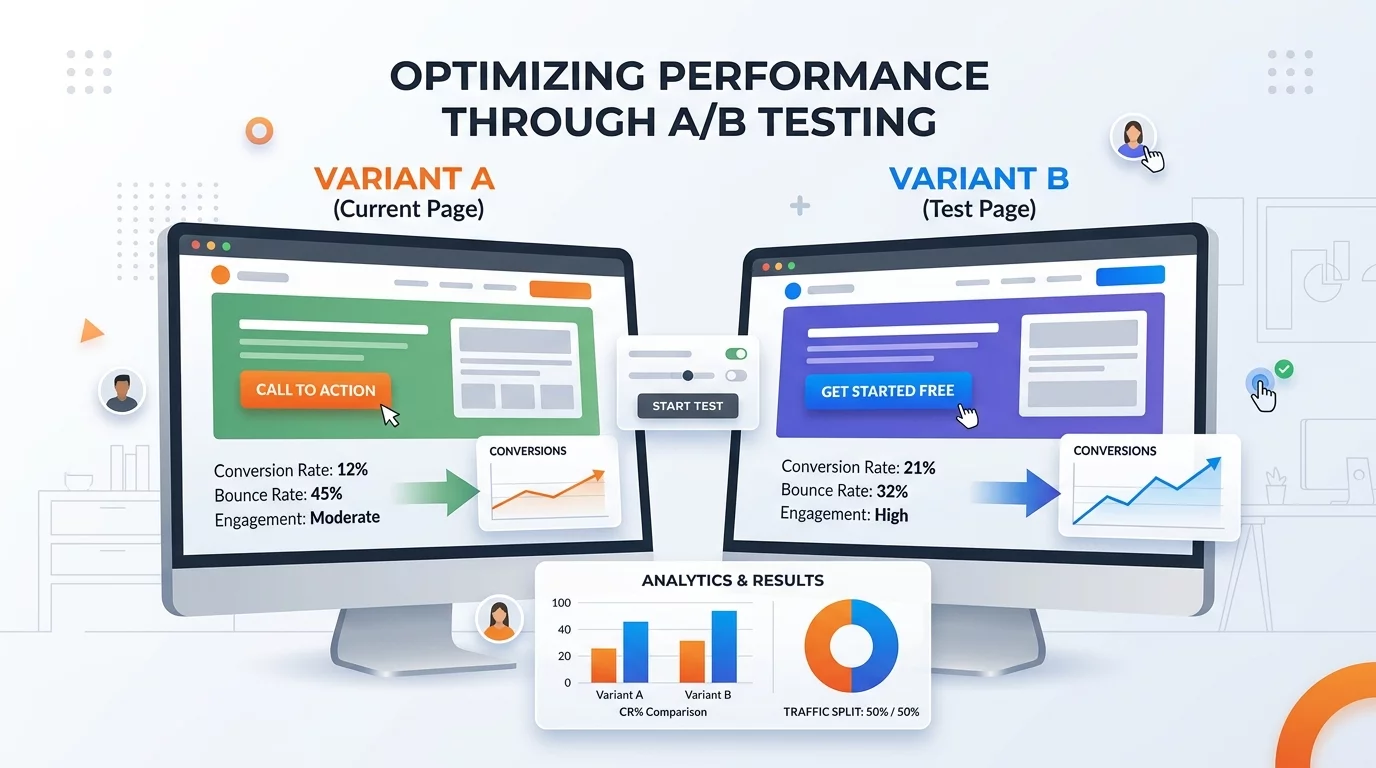
If you run a business website in Singapore, you probably already know that getting visitors to your site is only half the battle. The real question is: are those visitors doing what you want them to do? Whether that means buying your product, booking your service, signing up for your newsletter, or simply contacting you, your website conversion rate determines your business success. But how do you know what changes will actually improve that rate? This is where A/B testing becomes your most powerful tool.
A/B testing, also called split testing, is a method where you show two different versions of a webpage to different groups of visitors and measure which version performs better. Version A is your current page, and version B is the modified version with one change. By testing systematically, you can make decisions based on actual data rather than guesswork. For Singapore business owners who may not have large marketing teams or big budgets, A/B testing gives you a way to continuously improve your website without needing to hire expensive consultants or redesign your entire site at once.
The problem many beginners face is knowing where to start. They hear about A/B testing, get excited, and immediately try to test too many things at once or test the wrong elements altogether. This guide will walk you through exactly what to test first on your Singapore business website, how to set up your first test properly, and how to interpret results so you can make confident decisions about your website changes.
Why A/B Testing Matters for Your Singapore Business Website
Before we dive into what to test, let us understand why A/B testing is particularly important for Singapore business owners. Singapore has one of the highest internet penetration rates in the world, with most consumers researching products and services online before making purchasing decisions. Your website is often the first point of contact between you and potential customers. If your website is not converting visitors into customers effectively, you are essentially throwing away money on advertising that brings people to a site that does not work for you.
Many business owners assume that improving their website means hiring a web designer to completely rebuild it, or they blindly copy what their competitors are doing. Neither approach is ideal. Your competitors may have a completely different target audience, and a complete rebuild is expensive and time-consuming. A/B testing lets you make small, incremental changes that add up to significant improvements over time. Best of all, every change you make is backed by real data from your actual visitors.
For example, a Singapore restaurant owner might discover through testing that moving their reservation button from the bottom of the page to a more prominent position increased bookings by 25 percent. A local plumbing company might find that adding a photo of their team to their contact page reduced bounce rates and increased quote requests. These are real improvements that directly impact the business bottom line, and they were discovered through systematic testing rather than guesswork.
What to Test First: Starting With High-Impact Elements
One of the biggest mistakes beginners make is trying to test everything at once. When you test multiple changes simultaneously, you have no way of knowing which specific change caused any improvement or decline. The key to successful A/B testing is to change one element at a time. This discipline allows you to attribute results precisely to the change you made.
For your first A/B test, you want to focus on elements that have the biggest potential impact on your conversion goals. These are typically elements that either encourage action or create friction for your visitors. Here are the most important elements to consider testing first, ranked roughly by their typical impact on conversion rates.
The first and most impactful element to test is your call-to-action, also known as your CTA. Your CTA is the button or link that tells visitors what you want them to do next. It might say "Book Now," "Get a Quote," "Download Our Price List," or "Contact Us." The wording, color, size, and placement of your CTA can dramatically affect how many visitors take that action. Studies have shown that CTA buttons with action-oriented, specific wording consistently outperform generic options. For a Singapore business, instead of a CTA that just says "Submit," try something more specific like "Get Your Free Quote" or "Book Your Appointment Today."
The second element you should test early is your headline and subheadlines. Your headline is often the first thing visitors read, and it sets the tone for everything else on the page. A compelling headline that clearly communicates your value proposition can significantly reduce bounce rates and keep visitors engaged. Test different approaches: some businesses find that benefit-focused headlines work best, while others see better results with problem-focused headlines that speak directly to pain points.
The third element is your above-the-fold content, which refers to everything visitors can see without scrolling. On desktop computers, this typically includes your navigation menu, logo, main headline, a brief description, and your primary CTA. On mobile devices, the above-the-fold area is even smaller due to smaller screens. Since this is the first content your visitors see, it deserves careful attention. Test different arrangements, remove unnecessary elements that distract from your main message, and ensure your value proposition is immediately clear.
Step-by-Step Guide to Your First A/B Test
Now that you know what to test, let us walk through exactly how to set up your first A/B test. We will keep this practical and focused on what you can implement right away using common tools available to Singapore business owners.
Step 1: Define Your Conversion Goal
Before you start testing, you need to clearly define what success looks like for your website. What action do you want visitors to take? Common conversion goals for Singapore businesses include form submissions, phone calls, email signups, product purchases, or booking appointments. Be specific. Instead of saying "more engagement," say "increase the number of quote requests from the contact form by at least 15 percent." Having a clear metric helps you determine whether your test was successful.
Step 2: Choose Your Testing Tool
For most Singapore business owners using WordPress, Wix, Shopify, or similar platforms, there are many A/B testing tools available. Google Optimize is a popular free option that integrates well with Google Analytics. Other options include Optimizely, VWO, and Unbounce. If you are using WordPress, plugins like Nelio A/B Testing or Simple Page Tester make the process straightforward without requiring any code knowledge. Choose a tool that fits your budget and technical comfort level. For beginners, starting with a free or low-cost tool is perfectly reasonable while you learn the process.
Step 3: Create Your Hypothesis
Before making any changes, write down your hypothesis. A good hypothesis states what you expect to happen and why. For example: "I hypothesize that changing the contact form button from gray to green will increase form submissions because green is more visually prominent and signals a positive action." Having a written hypothesis keeps you focused and helps you avoid the temptation to make multiple changes at once. It also helps you learn from both successful and unsuccessful tests.
Step 4: Create Your Variation
Make only one change for your first test. If you are testing your CTA button, change only the button. Do not change the headline, the layout, and the button all at once. If you are testing a headline, change only the headline text. This discipline is essential for getting meaningful results. Make the change in your testing tool and ensure it is working correctly before launching the test.
Step 5: Set Your Test Duration and Launch
One of the most common mistakes is ending a test too early. You need enough data for your results to be statistically significant, which means the results are likely due to your change rather than random chance. As a general rule, your test should run for at least two full business cycles, typically two weeks minimum. Many beginners make the mistake of checking their results after a few days, seeing what looks like a winner, and stopping the test early. This can lead to incorrect conclusions because early results are often influenced by short-term variations in traffic.
A good minimum sample size depends on your current traffic levels. If your website receives 100 visitors per day and you typically see a 5 percent conversion rate, you are getting about 5 conversions per day. To detect a meaningful improvement of 20 percent or more, you would typically need several hundred conversions total across both versions. Use an online A/B test calculator to estimate how long your test should run based on your traffic and expected conversion rates.
Step 6: Analyze Your Results
Once your test has run for the appropriate duration and you have enough data, it is time to analyze the results. Most A/B testing tools will show you the winning variation and the confidence level of the results. A confidence level of 95 percent or higher is generally considered statistically significant, meaning there is only a 5 percent chance the results are due to random chance. However, do not blindly follow the numbers. Consider whether the results make sense in the context of your business and your typical customer behavior.
Look at both the quantitative results, such as conversion rates and statistical significance, and qualitative insights, such as user feedback or observations about user behavior. Sometimes a test that shows a small numerical improvement actually reveals something more valuable about how your users think and behave.
Common A/B Testing Mistakes to Avoid
Even with good intentions, beginners often fall into patterns that undermine their testing efforts. Understanding these common mistakes will help you avoid them in your own testing program.
The first mistake is testing too many things at once. We mentioned this earlier but it is worth repeating because it is the most common error. If you change your headline, button color, form length, and page layout all simultaneously, you will have no idea which change caused any improvement. Always isolate one variable at a time. This takes longer but produces reliable, actionable results.
The second mistake is ending tests too early. We discussed this as well. Patience is critical in A/B testing. Give your test enough time to accumulate meaningful data. Rushing to conclusions based on early data is one of the fastest ways to make poor decisions about your website.
The third mistake is ignoring mobile visitors. In Singapore, mobile internet usage is extremely high, with many users primarily accessing websites through their smartphones. If your website receives significant mobile traffic, ensure your A/B tests include mobile users. Some testing tools allow you to run separate tests for desktop and mobile, or to view results segmented by device type. What works on desktop may not work on mobile, and vice versa.
The fourth mistake is not considering external factors. Traffic sources, seasonal trends, marketing campaigns, and even weather can influence how visitors behave on your website. If you run a promotion on Facebook that drives a surge of new traffic, your test results during that period may not reflect typical behavior. Try to run tests during normal business periods and consider external factors when interpreting results.
The fifth mistake is implementing changes without documenting what you learned. Every A/B test, whether it wins or loses, provides valuable information about your audience. Document your hypotheses, your changes, your results, and your learnings. This knowledge compounds over time and helps you become better at predicting what will work before you even run a test.
What to Test After Your First A/B Test
Once you have completed your first successful A/B test, you will have gained valuable data about what resonates with your audience. Here is where to focus your attention next as you build a systematic testing program for your Singapore business website.
After your initial round of CTA and headline testing, consider exploring form design if your conversion goal involves form submissions. Test the number of fields in your form. Longer forms can discourage submissions, but sometimes the data you collect justifies the extra fields. Test field types and arrangements. Sometimes breaking a single name field into first and last name fields can feel more natural to users. Test the form placement on the page and whether it should appear inline or in a modal popup.
Images and social proof are another fruitful area for testing. If your website uses photos of products, team members, or your business location, test different images. Authentic photos of your real team and premises often outperform generic stock photos in building trust with Singapore customers who value local businesses. Test whether adding customer testimonials, review scores, or trust badges near your CTA increases conversions.
Page layout and content organization also offer significant testing opportunities. Some businesses find that a longer, more detailed page converts better because it addresses more customer questions. Others find that shorter, more focused pages work better because they reduce cognitive load and get visitors to the CTA faster. Test different content arrangements and pay attention to how far visitors scroll and where they seem most engaged.
Building a Sustainable Testing Culture for Your Business
A/B testing should not be a one-time project but rather an ongoing practice that continuously improves your website over time. Even small improvements, when accumulated over months and years, can result in dramatically better conversion rates and, ultimately, more revenue for your business.
Start a testing log where you document every test you run, including the hypothesis, the change you made, the results, and your key learnings. This log becomes a valuable reference that helps you avoid repeating mistakes and builds institutional knowledge about what works for your specific audience.
Make testing a regular habit by scheduling time each month to review your website analytics, identify underperforming areas, and plan your next round of tests. Successful A/B testing programs treat website optimization as a continuous process rather than a one-time project. The businesses that excel at this treat their website as a living, evolving asset that constantly gets better based on data.
It is also important to involve your team in the testing process. Everyone in your organization who interacts with customers likely has insights about what questions customers ask, what concerns they have, and what might convince them to convert. Create a culture where ideas for tests come from multiple sources and where everyone understands the value of making decisions based on data rather than opinions.
Finally, be patient with the process. You will not see dramatic improvements overnight. Some tests will fail to show any improvement, and that is valuable information too. The key is to keep testing, keep learning, and keep iterating. Over time, the cumulative effect of all your testing efforts will result in a website that consistently performs better at converting visitors into customers.
Final Thoughts
A/B testing is one of the most powerful tools available to Singapore business owners who want to improve their website performance without rebuilding everything from scratch. By starting with high-impact elements like your call-to-action and headlines, following a systematic testing process, and avoiding common mistakes, you can begin making data-driven decisions about your website today.
Remember that the goal of A/B testing is not just to win individual tests but to build a deeper understanding of your customers and what motivates them to take action. Each test teaches you something valuable, even when results do not show dramatic improvements. The businesses that excel at online marketing are the ones that commit to continuous learning and continuous improvement.
If you still need help, feel free to contact us at https://webcare.sg/contact for a free website health check.
Related WebCare Solutions

How to Fix Slow Website Performance: A Comprehensive Guide
Struggling with a slow website in Singapore? Learn how to enhance performance and user experience tailored to the local market.

Why is My Website’s Layout Broken? How to Fix CSS Issues
Learn how to identify and resolve common CSS conflicts and coding errors that can cause your website layout to break.

Why Is My Website Footer Important? A Singapore Business Owner's Guide
A website footer is more than just the bottom of a page. Learn why it matters for your Singapore business website and how to optimise it step by step.
Ready to get started?
Focus on your business while we fix your website. Contact WebCareSG today for fast, reliable solutions!
Whatsapp us on