Decoding Google''s Search Generative Experience (SGE)
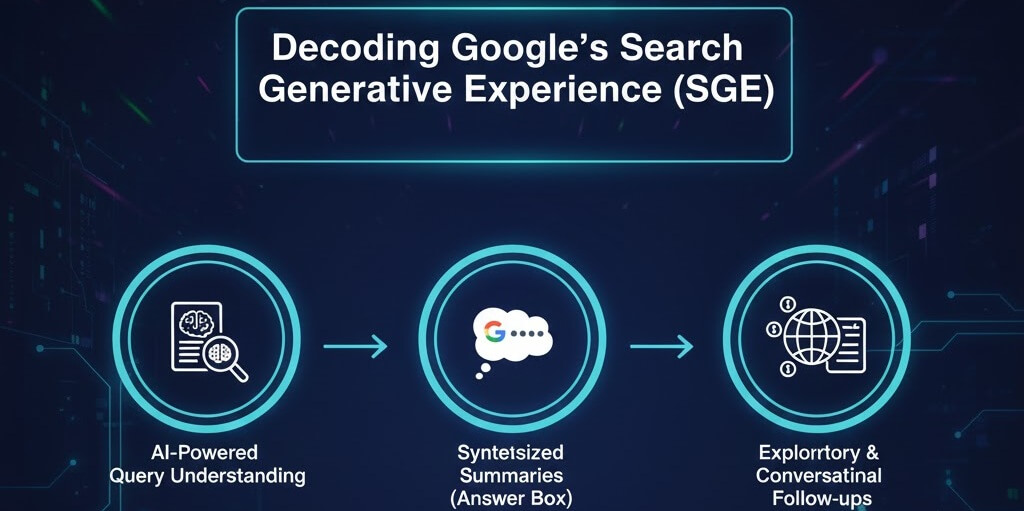
Understanding the New Face of Search
Google has fundamentally changed how it presents information through Search Generative Experience (SGE), now widely known as AI Overviews. Instead of just providing a list of links, Google now uses large language models to synthesize an answer directly at the top of the page. For website owners, this means "standard" SEO is no longer enough; you must now compete to be a cited source within the AI bubble. Failure to adapt is a primary cause for fixing poor seo optimization. This guide decodes how the AI selects its sources and how you can stay ahead.
Step 1: How AI Overviews Select Information
Google''s AI doesn''t just pick the #1 ranked site. It looks for content that provides the highest "information gain"—meaning unique insights that aren''t just repetitions of other sites.
- Niche Authority: The AI prioritizes sites that demonstrate deep expertise in a specific topic.
- Corroboration: AI models cross-reference data. If your facts match other high-authority sites, you are more likely to be cited.
- Crawlability: If your site has technical blocks, the AI cannot read it. Check your importance of robots txt to ensure Google''s AI bot (Google-InspectionTool) has full access.
Step 2: Optimizing for the "AI Carousel"
The citations in SGE often appear in a carousel or a grid next to the AI text. To get your site featured here, you need to structure your data clearly.
- Use Descriptive Subheadings: AI uses H2 and H3 tags to understand the structure of your argument.
- Provide Direct Answers: Start your articles with a clear, 2-3 sentence summary of the main topic. This makes it easy for the AI to "clip" your content.
- High-Quality Imagery: Google often pulls an image from the cited source. Always optimize website images without sacrificing quality to ensure they look professional in the AI box.
Step 3: The Role of Conversational Content
SGE is designed to handle complex, conversational queries. Your content should reflect how people actually talk and ask questions. This ties directly into preparing your website for voice search and mobile AI assistants.
- Target "Why" and "How": Move beyond simple keywords and focus on explaining processes.
- Internal Link Clusters: Create a web of related content. If the AI finds one good answer on your site, it will crawl your internal links to find more context. Use a tool to identify fix broken internal links to keep this path clear.
- Maintain Speed: AI search results are dynamic and fast. If your site is slow, it won''t be used as a source. Use AI tools to speed up your site.
Step 4: Monitoring Your SGE Impact
Traditional rank tracking is becoming less accurate because SGE results change based on the user''s follow-up questions.
- Google Search Console: Look for "Search Appearance" filters to see how often your site is cited in AI Overviews. If you see a drop, check fix page not indexed google search console.
- User Engagement: If people click your link from an AI result, they expect an immediate answer. If they leave quickly, you may need to reduce bounce rate by improving website speed and content relevance.
- Technical Audits: AI search puts more pressure on your server. Regular technical audits are necessary to ensure your backend can handle the specific way AI bots crawl.
Step 5: Staying Resilient Against Algorithm Shifts
Google updates its AI models frequently. To stay cited, your site must remain stable and technically sound.
- Avoid Over-Reliance on AI Content: Ironically, Google''s AI prefers human-written content for its citations. Follow ethical AI content practices to ensure your site isn''t flagged as low-quality.
- Security is Vital: If your site is compromised, it will be removed from AI results immediately. Use basic AI-powered security scans to stay safe.
- Maintain Your Server: Server errors will disqualify you from the SGE carousel. Keep your server maintenance checklist up to date.
Decoding Google''s SGE is about moving from "keyword matching" to "knowledge providing." If you are struggling to adapt your SEO strategy for the AI era or if your traffic has dropped since the rollout of AI Overviews, WebCare SG is here to help you optimize. Contact us today to future-proof your search visibility.
Related WebCare Solutions

Why is My E-Commerce Website Not Processing Payments? How to Fix It
A comprehensive guide discussing common payment gateway issues and providing detailed steps on how to troubleshoot and resolve them to ensure smooth transaction processing on your e-commerce website.

How to Fix Slow Website Performance: A Comprehensive Guide
Struggling with a slow website in Singapore? Learn how to enhance performance and user experience tailored to the local market.
The Ultimate Guide to WordPress Database Cleanup
A deep dive into safely removing transients, old revisions, and orphaned data to improve backend performance and site reliability.
Ready to get started?
Focus on your business while we fix your website. Contact WebCareSG today for fast, reliable solutions!
Whatsapp us on