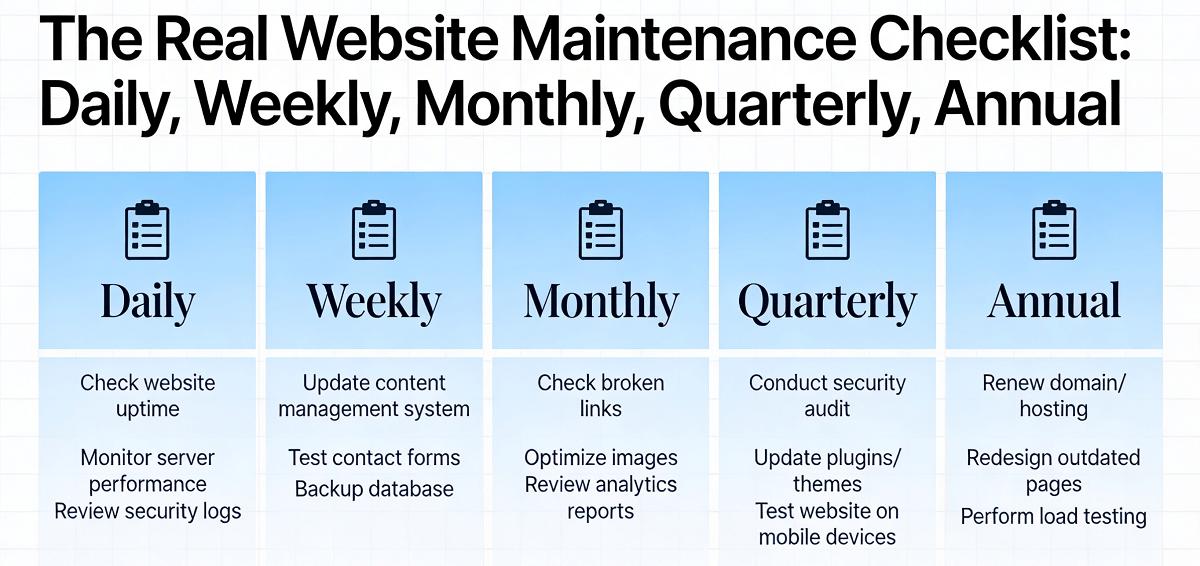
As Singapore cements its status as a leading global digital hub, local enterprises face an increasingly cutthroat online marketplace. In an era shaped by advanced artificial intelligence, automated search algorithms, and heightened consumer expectations, simply owning a website is no longer a guarantee of business success. Whether you manage a fast-growing e-commerce platform or a traditional B2B consultancy, your website serves as the primary gateway for your target audience. Treating your digital storefront as a static corporate asset is a costly operational mistake. Without a proactive strategy to manage updates, optimize performance, and protect server databases, your platform will quickly experience diminishing performance, functional failures, and security gaps.
Failing to invest in structured upkeep introduces severe long-term technical debt. Outdated system frameworks, slow page response times, and broken interactive elements alienate customers and signal neglect to modern search engines. To remain competitive, secure, and fully operational, local enterprises must transition from reactive troubleshooting to a comprehensive maintenance strategy. This deep dive outlines the critical technical and commercial factors making an ongoing maintenance framework an absolute necessity for businesses looking to scale efficiently and protect their bottom lines.
The Escalating Cybersecurity Threat Landscape
The frequency and sophistication of automated cyber threats targeting regional web servers have intensified significantly. Small and medium enterprises (SMEs) are frequently targeted by malicious bots searching for unpatched software, weak administrative credentials, and unconfigured server ports. If your company operates on a content management system without routine security patches, you are highly susceptible to database injection attacks, malicious redirects, and unauthorized file access. Resolving these preventable breaches after they occur disrupts business continuity and drains valuable technical resources, which is why a foundational website security audit [cite: 1] is essential for establishing baseline protection.
A structured maintenance framework eliminates these systemic security blind spots by enforcing routine core updates, configuring robust web application firewalls, and managing server access logs. Furthermore, the commercial and legal fallout from a corporate data leak can be catastrophic for local brands under modern regulatory frameworks like Singapore's Personal Data Protection Act (PDPA). To mitigate these severe operational risks, businesses must prioritize proactive administrative strategies designed to protect against hacks and recover from breaches [cite: 1] before an exploit disrupts daily transactions.
Core Web Vitals and User Experience Standards
Modern consumers have exceptionally low tolerance for unresponsive platforms or delayed page loading speeds. Search engines have continuously adjusted their evaluation criteria to weigh user experience metrics heavily, transforming technical performance from a background consideration into a core growth factor. When automated search crawlers index your system, they closely measure performance indicators like Largest Contentful Paint (LCP) and First Input Delay (FID). If you want to maximize your organic visibility, you must have a clear understanding of how these metrics affect your bottom line; explore our guide on understanding core web vitals impact seo [cite: 1] to optimize your layout correctly.
Slow asset delivery, poorly optimized media elements, and excessive third-party scripts lengthen page generation times, driving frustrated users directly to your competitors. A managed maintenance routine tackles these bottlenecks systematically by cleaning database schemas, leveraging server-side object caching, minifying style sheets, and implementing modern delivery solutions. Maintaining peak rendering speeds across various devices directly enhances conversion rates and improves your organic search standing. For an in-depth breakdown of practical optimization methods, review our actionable guide on how to fix slow website performance[cite: 1].
Preventing Software Conflicts and Functional Degradation
Modern digital platforms are complex ecosystems constructed from interconnected software layers, content frameworks, functional plugins, and external API dependencies. Software developers frequently push updates to patch security vulnerabilities, eliminate legacy bugs, and introduce improved operational features. When these components are left unmanaged for months at a time, your platform risks severe software drift, where older code becomes incompatible with newer server operating environments. Learning the technical frameworks for how to update website without breaking it [cite: 1] is necessary to ensure these updates do not cause theme distortions or total layout crashes.
Neglecting these structural updates often leads to sudden script failures, broken forms, and disabled checkout elements that severely hurt customer trust. A regular maintenance workflow ensures that every framework update, database adjustment, and plugin patch is verified within an isolated staging environment before being deployed live to your users. Embracing a disciplined operational approach highlights the broader importance of regular website maintenance [cite: 1] for extending your digital platform's overall lifespan and keeping user-facing channels operating flawlessly.
Sustaining Dominance in Local Search Engine Optimization (SEO)
Search engines prioritize crawling platforms that display consistent structural health, up-to-date content architectures, and error-free site configurations. If a website begins generating high volumes of internal redirect errors, unindexed media files, or broken links, search bots conclude the resource is unmaintained and downgrade its search rankings. This drop in visibility quickly cuts off organic lead generation pipelines. If your brand is currently struggling with low visibility, implementing a dedicated framework for fixing poor seo optimization [cite: 1] is required to regain your footing in local search results.
A well-structured maintenance routine provides continuous quality control across your entire digital presence. This includes running automated crawlers to detect hidden link errors, verifying server metadata configuration files, and tracking overall indexing health to ensure your domain remains highly visible to local buyers. Consistently keeping your code and data architecture clean satisfies search engine guidelines, preserving your valuable organic rankings and maximizing the long-term return on your digital marketing spend.
Data Protection via Disaster Recovery Frameworks
Despite implementing top-tier security measures, unexpected system failures can still occur due to data center disruptions, cloud hosting errors, or manual configuration slip-ups. If your platform suffers a critical database crash or a severe file corruption event without a current backup system in place, you face the devastating prospect of rebuilding your digital asset from scratch. This scenario leads to massive financial losses, prolonged downtime, and severe damage to client relationships. Recognizing the fundamental importance of backups for your website [cite: 1] is the first step toward safeguarding your company's critical information assets.
A comprehensive website maintenance plan eliminates data loss anxiety by deploying automated, redundant backup protocols that run on daily or weekly cycles. These encrypted data snapshots must be securely stored across off-site cloud architectures rather than relying on the primary web host server alone. Maintaining an active, verified log of your backup records gives your management team total peace of mind, knowing that your digital platform can be restored within minutes if an emergency strikes.
When to Call the Experts
Managing the fine details of website health requires a specialized technical skillset and a significant time commitment. For many business owners, attempting to balance software patching, database optimization, and security scanning while running daily corporate operations leads to operational burnout or critical configuration errors. If you notice a steady decline when tracking your essential website metrics business owners [cite: 1] depend on, it is a clear indicator that your system requires professional evaluation.
Partnering with a specialized service provider ensures your web infrastructure benefits from industry-grade monitoring tools, rapid troubleshooting, and strategic performance tuning. Delegating these complex responsibilities to dedicated web professionals allows your internal teams to focus 100% of their energy on core business objectives, service delivery, and revenue generation, secure in the knowledge that your platform is stable, secure, and fully optimized.
If you’re still having trouble, don’t worry! WebCare SG is here to help. Contact us today for fast and reliable website fixes.