Keeping Your Site Fresh: Easy Content Update Strategies for 2026 SEO
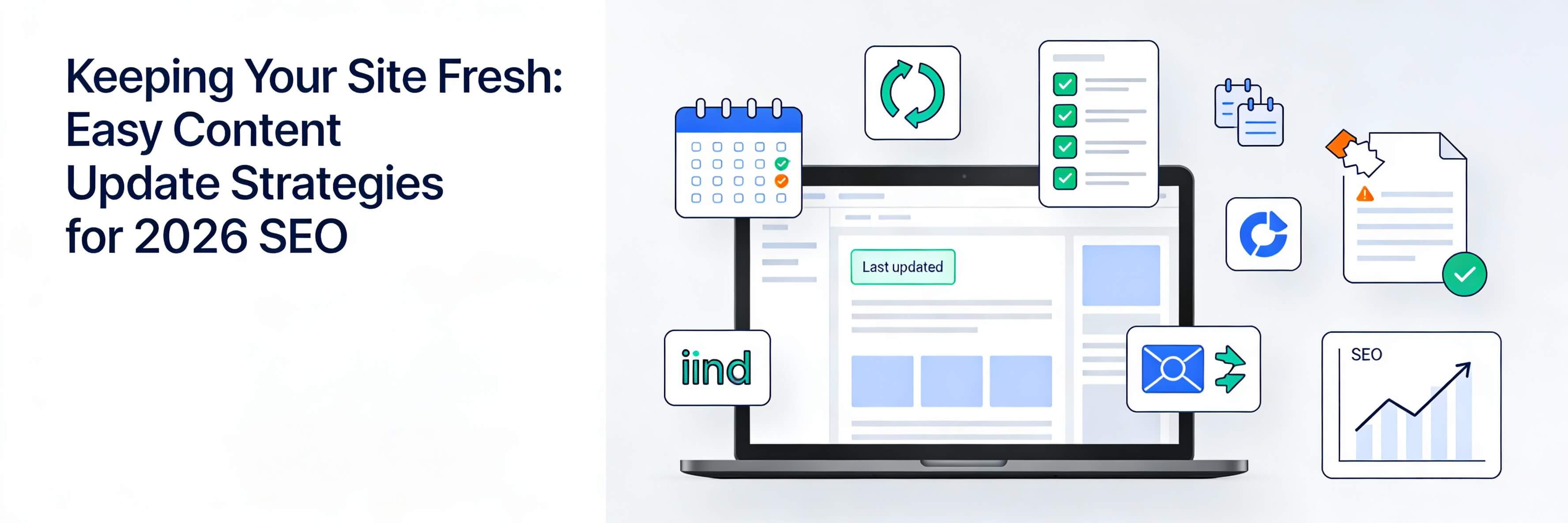
Why "Freshness" is a Ranking Factor in 2026
In the age of AI-driven search, information has a shorter shelf life. Google and AI chatbots prioritize content that is not only accurate but timely. If your best-performing article was written in 2022, its authority is likely decaying. "Content Freshness" is a signal that tells search engines your site is actively maintained and reliable. This is far more effective than fixing poor seo optimization after your traffic has already flatlined. This guide shows you how to keep your site relevant with minimal effort.
1. The "80/20" Content Refresh Strategy
You don''t always need to write new posts. Often, refreshing your existing high-traffic pages yields a much higher ROI. Focus on the 20% of your content that drives 80% of your results.
- Update the Data: Swap out old statistics for 2025 or 2026 figures. AI models like ChatGPT and Gemini love citing current data.
- Fix the Links: Broken links are a major signal of neglect. Use your weekly routine to identify and fix broken internal links.
- Optimize for New Intent: Ensure the post still follows the anatomy of a perfect blog post, including updated headers and better internal linking.
2. Adding User-Generated Content (UGC) Signals
AI search engines look for human interaction to verify that a page is valuable. Encouraging and displaying user-generated content is a powerful way to "auto-refresh" your pages.
- Enable and Moderate Comments: Real questions and answers in the comments section provide fresh, semantic text for search bots. Learn how to remove spam to keep the quality high.
- Embed Social Proof: Pull in recent Instagram mentions or Google Reviews. This is an essential part of how to use social proof to build trust.
- Q&A Schema: Add a "Common Questions" section at the bottom of posts and use FAQ schema markup to help AI assistants find your answers.
3. Monitoring Trends with Free Tools
To keep your content fresh, you need to know what people are searching for *now*. You don''t need expensive software to stay ahead of the curve.
- Google Trends: Set up alerts for your industry keywords in Singapore to catch rising topics early.
- Google Search Console: Look for "Queries" where you have high impressions but low clicks. This indicates you need better micro-copy or a title refresh.
- AnswerThePublic: Use this to find the specific questions people are asking today, which is vital for voice search optimization.
4. Technical Hygiene: The Foundation of Freshness
A fresh site must also be a fast site. If your backend is cluttered with old revisions and unoptimized assets, your updates won''t matter.
- Database Cleanup: Regularly remove post revisions to keep your site lean. Follow our database cleanup guide.
- Speed Audit: As you add new elements, ensure they don''t slow you down. Always strive to speed up your site for better mobile performance.
- Mobile Check: Ensure your updates look great on all devices. Check how to fix poor mobile responsiveness if your new layouts are breaking on phones.
5. The AI-Driven Search Advantage
Regular updates help your site stay in the "active" index of LLMs (Large Language Models). When you update content, you provide fresh training data for Google AI Overviews.
- Indexing: After a major refresh, use Search Console to request a re-index. If it doesn''t show up, you may need to fix page not indexed issues.
- Health Checks: Use your weekly website health check to ensure your scheduled updates are appearing correctly.
- Authority: Consistent updates are the best way of building brand authority over time.
Keeping your website fresh doesn''t have to be a full-time job. By focusing on high-impact refreshes, leveraging user feedback, and monitoring free data, you can stay ahead of the competition and remain visible in the AI search era. If you find it difficult to keep up with regular updates or if your site feels technically outdated, WebCare SG is here to manage your content and performance strategy. Contact us today to keep your digital presence alive and growing.
Related WebCare Solutions

Optimize Page Titles, Meta Descriptions, and Schema Markup
Learn how to write effective page titles and meta descriptions, implement JSON-LD schema markup, and validate your code to improve your website's search engine visibility.
Best Practices for Updating WordPress and Plugins
Learn the essential best practices for safely updating WordPress and plugins to ensure security, performance, and compatibility.
Understanding Common HTTP Status Codes and How to Resolve Them
Learn about common HTTP status codes like 403, 404, 502, 503, and 401. Understand their causes and solutions with practical examples and code.
Ready to get started?
Focus on your business while we fix your website. Contact WebCareSG today for fast, reliable solutions!
Whatsapp us on